17 Brain Fog Facts That May Surprise You





.svg)

Brain fog affects so many people for a wide variety of reasons. Understanding what brain fog is—and isn’t—is the key to identifying the root cause(s) and appropriate treatments so you can get back to thinking clearly. Let’s identify some of the common myths and facts about brain fog, to help you clear the clouds.
If you’ve ever hit a midday slump where it feels impossible to think clearly or get things done, you’ve likely experienced brain fog. As a 30-year-old self-employed journalist with ADHD, I often find myself drifting into waves of it at the most inopportune times—like right before a big deadline or when I’m trying to finish my list of to-dos at a reasonable hour.
In simple terms, brain fog happens when the brain’s communication signals slow down, especially in the prefrontal cortex—the area responsible for thinking, planning, and decision-making, explains Kimberly Idoko, M.D. Esq., a board-certified neurologist and medical director at Everwell Neurology in Los Angeles, California. As a result, different parts of the brain don’t work together as smoothly as they usually do.
“It isn’t a disease, but a symptom that can be caused by various factors and typically resolves once the cause is addressed,” says Idoko. Ahead, learn 17 facts about brain fog, plus practical ways to fight it so you can think more clearly.
Brain fog symptoms
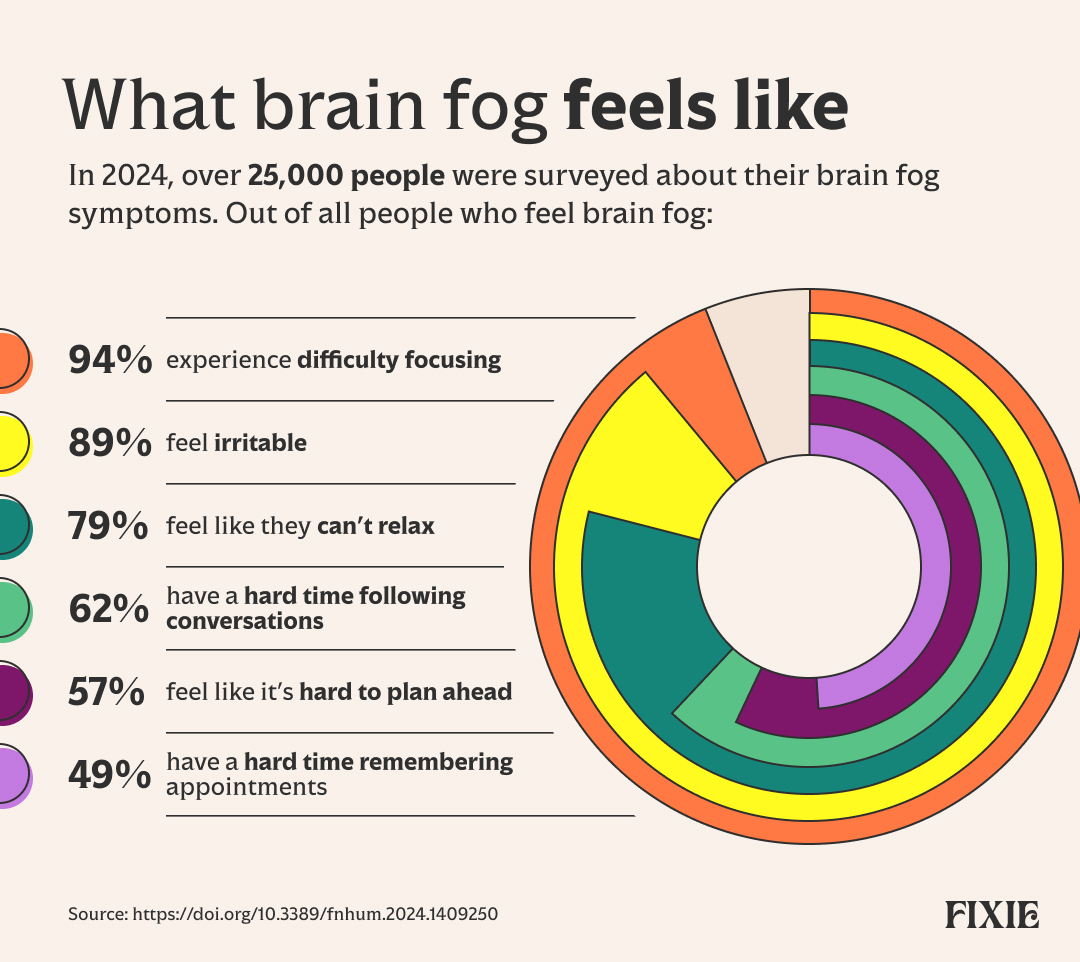
No two cases of brain fog are alike—one person may feel slow-to-think, whereas another person may feel easily distracted. Some common brain fog symptoms include:
- Difficulty concentrating: There’s nothing quite as frustrating as dedicating time to work but not being able to focus on the tasks at hand. Brain fog can make you feel like your mind is stuck in a heavy fog, making it challenging to stay engaged, alert, or complete even simple tasks.
- Confusion: That “hazy” feeling where your thoughts just won’t line up is another hallmark of brain fog. You may have trouble following conversations, lose your train of thought mid-sentence, or feel a bit “out of it” when you have brain fog.
- Mental fatigue: Mental exhaustion is another frequent companion of brain fog. You might find yourself zoning out or running on autopilot. Even after getting enough sleep, it can feel like your brain is running on low battery.
- Slowed mental processing. When brain fog hits, it can feel like your thoughts are moving at half the speed they usually do. Quick decisions or fast-paced discussions can feel overwhelming (or impossible). This can make it incredibly challenging to meet work deadlines, for example.
- Memory slips: Classic brain fog symptoms include forgetfulness and second-guessing. You might miss an appointment, space on someone’s name, or wonder if you already took your daily supplements and medications.
- Dizziness and head pressure: For some people, brain fog can accompany physical symptoms. Some may experience tightness or pressure in their head, while others experience dizziness or lightheadedness.
Brain fog facts supported by research
There’s a lot of confusion about what brain fog actually is. These myth-busting facts can help you understand what’s really going on—and what isn’t.
1: You can’t be diagnosed with brain fog.
Brain fog isn't a medical diagnosis but rather a cluster of symptoms.“ Brain fog is a temporary state of reduced mental clarity,” says Idoko.
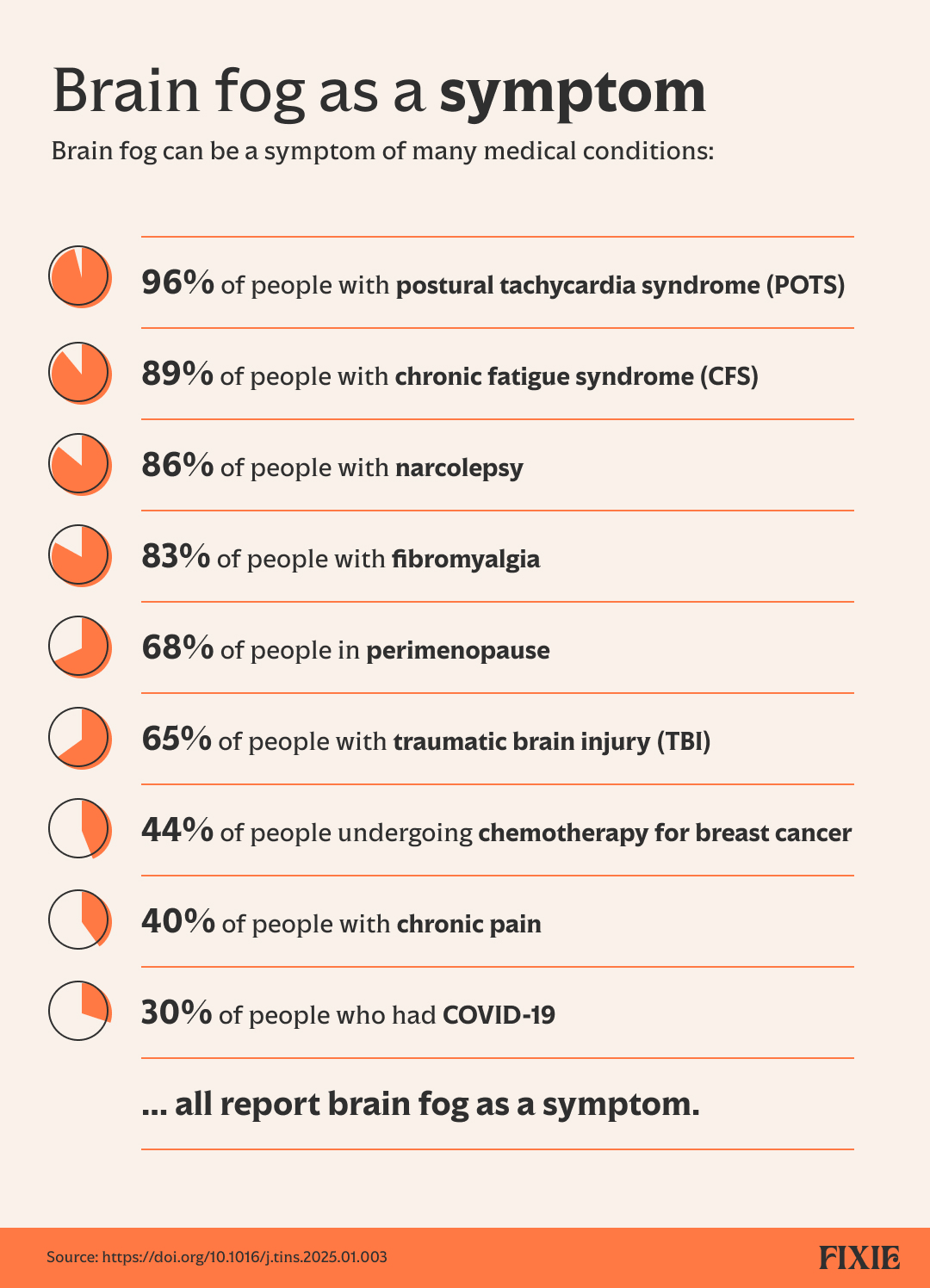
Brain fog doesn’t just appear out of nowhere, even though it can certainly feel that way sometimes. Some people can get brain fog as a result of certain health conditions like Parkinson’s, bipolar disorder, and even side effects from chemo. But still, brain fog itself isn’t a medical condition. Rather, it’s an important tip-off to something else happening within your body.
2. Brain fog can offer important clues about what your body needs.
Track patterns before chasing fixes. Information is power, but it’s equally important not to jump to conclusions too quickly. Consider tracking when symptoms of brain fog start to appear. For example, do you feel hazy after a night of restless sleep? Or, do you feel fuzzy when you’re under a lot of stress or anxious? Drawing these connections can help you identify the root cause of brain fog, allowing you to act accordingly.
3. Multitasking can reduce your brain’s efficiency.
Task-switching drains the brain. Jumping back and forth between tasks doesn’t make you more efficient—it actually causes your brain to repeatedly “reboot” its focus. Each switch requires your working memory to drop one task and fixate on another, which increases mental fatigue and slows processing. This constant cognitive toggling can manifest as mental heaviness and slowed thinking—two symptoms of brain fog.
What’s more, multitasking can elevate stress levels, which can trigger brain fog for some people, research suggests. Plus, the brain simply isn’t designed to focus on several complex tasks at once. Findings from an older study show that switching between tasks slows the brain down—costing up to nearly 40 percent of someone’s productive time. This constant juggling can contribute to mental fatigue.
4. Brain fog doesn’t mean your brain is faulty.
Brain fog is often described as a temporary state of mental sluggishness. But that doesn’t necessarily mean your brain is unhealthy. A 2025 review shows that how foggy someone feels doesn’t reliably align with how they perform on cognitive tests. So feeling foggy doesn’t mean your brain is declining—it reflects a subjective experience that can be shaped by factors like stress, fatigue, illness, and sleep rather than long-term brain health.
5. Brain fog usually isn’t permanent.
Just because you have brain fog right now doesn’t mean it will stick around forever. Brain fog can be short-term and temporary, like after a poor night’s sleep or drinking one too many cocktails.
Still others may experience episodic brain fog, which may be triggered by acute illness, migraines, or hormonal changes. For instance, some women are susceptible to brain fog during the late luteal phase of the menstrual cycle, when progesterone levels rise, but they notice the fog lifts once menstruation begins.
The TL;DR is this: while some people experience long-term brain fog as a result of chronic illness, long Covid, or traumatic brain injury, brain fog isn’t necessarily a life sentence. Once you figure out the cause, there may very well be a solution available.
6. Brain fog doesn't necessarily mean dementia is inevitable.
Brain fog is not synonymous with dementia or Alzheimer's. When you have bouts of brain fog, it’s not necessarily a sign of cognitive decline. While brain fog can make you feel slow or unfocused, early dementia involves very different symptoms. The key is to recognize if your symptoms are worsening over time.
Dementia often includes progressive memory loss, getting lost in familiar places, or trouble finding words. Brain fog, on the other hand, tends to come and go and usually improves over time with rest, better sleep, or reduced stress. Even when an older adult is diagnosed with mild cognitive impairment (MCI), a condition that often precedes dementia, only about 40% of people who receive that diagnosis will go on to develop dementia.
7. Brain fog can be caused by conditions in other parts of the body.
Hormonal shifts, gut bacteria imbalances, and even acute coronary syndrome can all interfere with mental clarity. For example, research shows that perimenopausal hormone fluctuations are linked to difficulties with memory. Research on the gut–brain axis suggests that disruptions in the gut microbiome can increase inflammation and affect cognitive function. Because the brain is the operations hub of the entire body, it’s important to note what’s happening across systems in order to figure out a root cause of brain fog.
8. Physical activity can directly impact brain function—beyond just boosting your mood.
Exercise builds your muscles and your brain. A 2018 review found that regular aerobic or strength-based exercise had numerous positive effects on the brain—including growth in areas of the brain involved in memory and decision-making, better communication pathways between areas of your brain, and stronger signals that help the brain form and maintain new connections. These findings suggest that regular exercise can enhance your attention, working memory, processing speed, and executive function… and therefore may keep brain fog at bay.
9. To combat brain fog, sleep is paramount.
It’s sleep quality, not just quantity, that helps prevent brain fog. “Fragmented or insufficient sleep increases oxidative stress, which reduces working memory and executive processing,” says Idoko. In other words, even if you’re in bed for seven hours, constantly waking up or never reaching deep, restorative sleep can still leave your brain struggling to think clearly.
The Centers for Disease Control and Prevention (CDC) recommends at least seven hours of quality sleep each night. That deep, uninterrupted sleep is what allows the brain to clear out neurotoxic waste. When sleep is poor and this cleanup process is disrupted, those toxins can linger—leaving your mind feeling sluggish and foggy the next day, Idoko explains.
10. But “sleeping in” won’t actually improve your brain fog.
Consistency matters more than catching up. Sleeping in once in a while might feel good, but it doesn’t reset the internal clock that guides your brain’s daily rhythms.
Research shows that disrupting your circadian rhythm—whether from late nights, irregular sleep times, or shift work—can impair attention, slow reaction time, and worsen mental fog. Morning light exposure and a stable sleep–wake schedule help realign this rhythm, allowing the brain to function optimally.
For students, night-shift workers, or anyone with an irregular schedule, consistency matters more than catching up. Keeping a consistent sleep schedule according to our natural circadian rhythms helps the brain function most optimally. Sleeping in one day a week won’t undo the cognitive effects of a chaotic sleep pattern. Prioritizing regular, high-quality sleep each night is essential for supporting clearer thinking and better brain health.
11. Supplements alone won’t fix brain fog.
While supplements can fill nutritional gaps, they’re not a standalone solution. Lifestyle factors—like eating a nutrient-rich, anti-inflammatory diet, getting regular physical activity, managing stress, staying hydrated, and maintaining consistent, high-quality sleep—have a much stronger, collective impact on mental clarity than adding in a daily supplement.
12. Brain fog can lead to dips in mood and confidence.
Brain slow, mood low. When your thinking feels slow or unfocused, it’s common to feel frustrated, overwhelmed, or less capable. Research suggests that difficulties with attention and mental clarity can affect emotional well-being, lowering confidence and may also increase stress or irritability. Over time, this can create a cycle where feeling foggy impacts your mood, and feeling blue or overly stressed can amplify brain fog symptoms, other studies show. Brain fog and mood are more connected than you may think—supporting one often helps improve the other.
13. Living in crowded, urban environments can cause cognitive dysfunction.
Spend time in nature to clear your head. It’s well documented that green spaces and spending time in nature can help the brain function more optimally, but the opposite is also true. Living in urban environments can lead to brain fog and cognitive decline, mostly due to air pollution, stress, and overstimulation.
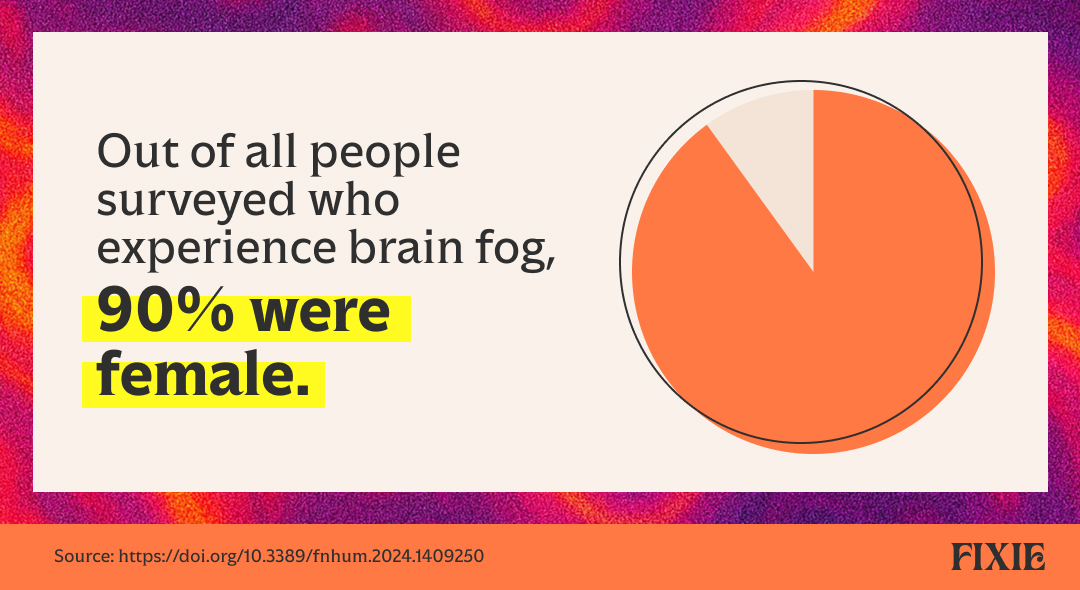
14. Brain fog affects women more often than men.
Research suggests that brain fog predominantly impacts women. It’s not hard to see why: it’s a common symptom of people experiencing major hormonal shifts (like perimenopause) and those who are managing chronic conditions, like long Covid, postural orthostatic tachycardia syndrome (POTS) or autoimmune conditions. What’s the common denominator in all of these brain fog causes? All of them are issues that disproportionately impact women. Add in the loss of sleep that often accompanies these conditions, and you’ve got a perfect recipe for mental sluggishness.
15. Some medications can directly trigger brain fog symptoms.
The root cause of your brain fog could be in your medicine cabinet. Sedatives, antihistamines, and certain other drugs can make the brain less alert, Idoko explains. By suppressing the arousal systems that help you stay mentally sharp, these medications can
slow cognition and make even simple tasks feel harder. Here are just a few classes of medications linked to brain fog:
- Antihypertensives and antiarrhythmics: prescribed for cardiovascular conditions and abnormal heart rhythms
- Diuretics: used to treat heart conditions, kidney disease, edema, glaucoma, and high blood pressure
- Antihistamines: used for common cold symptoms, allergies, and asthma (hellooooo Benadryl haze)
- Anticholinergics: prescribed for incontinence, respiratory disorders, and many other conditions
- Benzodiazepines: used to treat anxiety, panic attacks, insomnia, and seizures
- Antiepileptic medications: prescribed for preventing seizures and migraines
- Narcotic painkillers: prescribed after surgery or injury
- Some sleeping aids: used to treat insomnia
16. Hormone replacement therapy could lessen perimenopausal brain fog.
Those in perimenopause often report brain fog, which is a result of estrogen (and other hormones) ping-ponging up and down. “When estrogen, cortisol, or thyroid hormones are out of balance, neurons struggle to maintain optimal energy use and connectivity,” says Idoko. “These hormones regulate synaptic density and mitochondrial output, so an imbalance can produce sharp drops in focus.”
Hormone therapy has been shown to help alleviate symptoms of brain fog in perimenopausal people. “Testosterone also plays an important role in brain function, although it’s less clear, and not all women in menopause experience a significant decline in testosterone,” says Christine Maren, D.O., a board-certified family medicine physician and Menopause Society Certified Provider.
“Cognitive changes tend to stabilize in menopause once hormones level out,” Dr. Maren continues. “If cognitive symptoms are getting worse and not better after menopause, that is a sign that something more serious could be happening.”
If you’re interested in exploring whether perimenopause is impacting your cognition, your first course of action is to talk to your doctor and get your hormone levels checked. Once you have a clear picture of your levels, your doctor can suggest specific therapies that may help.
17. Brain fog can linger as a result of a virus.
Viral infections can slow brain function well past the acute phase. After viral infections such as COVID-19 or the flu, your body’s immune response can trigger inflammation in the brain, slowing how efficiently your brain cells function. “This reduces the energy available to power neurons and impairs cognition,” Idoko says.
In one large 2021 study that followed more than 236,000 people for six months after they had COVID-19, researchers found that about one-third developed a meaningful neurological or mental health issue during that time. In other words, problems affecting the brain or mood weren’t rare — they showed up in roughly 1 out of every 3 people studied, underscoring how COVID-19 can have lingering effects long after the initial infection has passed.
What’s more: A small 2024 study consisting of 41 previously hospitalized COVID-19 patients found that those whose illness had been more severe were more likely to report lingering “brain fog” nearly two years later. They also scored lower on measures of overall cognitive function, attention, and working memory.
But it’s not just COVID-19 that can cause lingering brain fog. Some research has found that symptoms of brain fog lasted 1 month after an acute infection of influenza A.
How to get rid of brain fog: daily habits that help
Try implementing these simple strategies into your daily routine to get rid of brain fog.
- Stay active. “Regular movement increases blood flow, oxygen delivery, and mitochondrial efficiency in the brain,” Idoko says.
- Aim for consistent, deep sleep. Our bodies rely on those deep, restorative stages of sleep to stay mentally sharp and physically healthy. Your body thrives with routines—try to go to bed and wake up at the same time each day. “If sleep disorders are present, treat them first,” Idoko says.
- Eat balanced meals and stay hydrated. Don’t overthink it. Sure, you can take some supplements, but you can also get plenty of brain-healthy nutrients in your diet alone. Balancing carbs, lean proteins, and healthy fats along with fiber-rich foods can go a long way. “Also, focus on foods with omega-3 fatty acids, antioxidants, and get adequate hydration to help restore metabolic clarity,” Idoko says.
- Manage stress. Chronic stress raises levels of the hormone cortisol. When cortisol stays high for too long, it can slow the growth of new brain cells and affect how the front part of your brain works, Idoko explains.
- Treat hormonal imbalances. Consider getting a bloodwork panel done with your healthcare provider. Ask about thyroid disease, adrenal fatigue, and perimenopause, Idoko recommends.
- Schedule a 5-minute reset. Sometimes, you just need to walk away from your computer, to-do list, meal prep—you name it. Try doing some breathwork or get fresh air by taking a quick walk. Also, try not to look at screens as you take this mental break.
- Give your memory a helping hand. With how much you’re expected to manage in the day (feeing yourself, attending work meetings, doing laundry, caring for children or pets, etc) cut yourself—and your brain—some slack by writing down high-priority taks onto sticky notes or set calendar alerts. Even writing a daily checklist at the start of your day can help you if your brain gets foggy by midday.
- Reduce switches. A lot of jobs these days require task-switching, which can lead to forgetfulness. Think about it: If you go from typing one email, to answering a Slack message, and then check in on another task, you can see how it's easy to forget about finishing and sending that email. Instead, try to complete one task at a time before pivoting to the next. Also, consider silencing non-urgent notifications.
- Work on your “focus hygiene.” The environment you work in says everything about your mental capacity. If your office, bedroom, living room (wherever you work from) is disorganized, cluttered, or noisy, that can disrupt your ability to focus and increase your stress levels—both of which can put you in a foggy state. Declutter, get organized, and wear noise-canceling headphones to help you get—and stay—in the zone.
- Try Fixie Dust. When you need to buckle down and power through your to-do list, Fixie Dust can offer a quick mental boost. It contains ingredients known to support focus, including citicoline, L-theanine, L-tyrosine, acetyl-L-carnitine, and a small amount of caffeine.
When to seek care
If brain fog isn’t letting up, that’s a major sign to contact your care team. Here are some red flags to watch out for, according to Idoko:
- Brain fog lasts longer than a few months
- Brain fog interferes with daily functioning
- Brain fog is accompanied by headaches or vision changes
- You start to experience speech difficulty or disorientation
- You have limb weakness, numbness, or difficulty walking (this can indicate a serious neurologic disease)
- Your memory is worsening rapidly worsening
- Worsening brain function affects your ability to work or your safety
- Your depression, anxiety, or sleep problems are getting worse, despite at-home treatments
How to prepare for your clinician visit
Set yourself up for success ahead of your doctor’s appointment with this checklist:
- Bring a two-week symptom or sleep log, as well as a comprehensive list of every medication and supplement you take
- Ask about potential causes and advocate for blood work, treatments, and sleep study eligibility (if you struggle to sleep)
- Set up a follow-up visit early so your care team can check your progress and make any needed changes to your treatment plan
The bottom line
Brain fog can feel disruptive and alarming, but it’s rarely a sign of permanent brain damage. Instead, you can think of this hazy feeling as your body and mind’s way of telling you that it’s stressed, not getting enough quality sleep each night, navigating a hormonal imbalance or chronic condition, or not getting as many fluids as it needs to thrive. Brain fog is usually reversible once you address the root cause.
When you need a little extra clarity to get through a busy day, the focus-enhancing ingredients in Fixie Dust supplements can help give your brain an additional boost.
Key takeaways
- Brain fog and cognitive decline are not one in the same—even though there is some symptom overlap.
- So many things can cause brain fog, including viral infections like COVID-19, not getting enough sleep, and even experiencing hormonal fluctuations, like those in the throes of perimenopause.
- While some people may experience brain fog for extended periods of time, it’s quite rarely permanent—especially if you address underlying causes.
Frequently Asked Questions
Brain fog can make you feel hazy and like you can’t formulate thoughts as quickly as you usually do. Some people even experience some head pressure or light dizziness with brain fog. Others struggle to focus or stay alert while doing certain tasks. It affects everyone differently.
You have to identify the root cause(s) of your brain fog first in order to beat it. If lack of quality sleep is the issue, for example, addressing that issue can be the ticket to thinking more clearly. In other situations, like long COVID, treatments may be more complex.
Brain fog can make you feel disconnected from yourself and make every task, no matter how small, feel incredibly challenging. This can leave you feeling frustrated, ashamed, and irritable.
It can make you feel less alert, slow to respond in conversation, and may even make you trip up on your words. However, brain fog isn’t a sign of cognitive damage.
It’s different for everyone depending on the cause. Be sure to contact your healthcare provider if brain fog persists. Remember, as Idoko says, brain fog should be temporary.
Latest Posts


.jpg)