Understanding ADHD Brain Fog and Ways to Cope





.svg)

Feeling mentally foggy on top of your ADHD symptoms? ADHD and brain fog can blur together in confusing ways, but understanding how they overlap (and what actually helps) can clear things up.
ADHD and brain fog can feel like a chaotic duo—especially when your brain is already juggling work, family, stress, and, in my case, perimenopause with a toddler who thinks sleep is optional. I know brain fog all too well. I haven’t just been there; I am there—losing my train of thought mid-sentence, forgetting basic words (an occupational hazard when you write for a living), and feeling like my mental hard drive is forever stuck on “loading.” It’s unsettling, frustrating, and honestly a little scary when your brain doesn’t feel like its usual self.
If you’re living with ADHD—or suspect you might be—you might be wondering whether the mental static you’re experiencing is “normal fog,” ADHD-related fuzziness, burnout, or something else entirely. You’re not alone, and you’re not imagining it. ADHD and brain fog can be connected, but they aren’t always the same thing.
In this guide, we’ll break down what ADHD brain fog feels like, the science behind why it happens, what tends to make it worse, and the evidence-backed strategies that actually help clear the haze—especially when they’re tailored to an ADHD brain. Let’s get into it.
What is brain fog?
Imagine brain fog as the mental equivalent of trying to read a street sign through heavy drizzle—technically you can see it, but everything feels a little blurry, slow, or just out of reach.
Brain fog isn’t an official medical diagnosis; it’s more of a catch-all phrase people use to describe a fuzzy, sluggish, “where-did-my-thought-go?” kind of brain. “Brain fog is a commonly used phrase to describe a subjective sense of mental cloudiness or diminished clarity of thought, though it does not represent a formal clinical diagnosis,” says clinical psychologist Clary Tepper, PhD. “Individuals experiencing brain fog often report that their cognitive processes feel sluggish or obscured, akin to attempting to think through a dense mist.”
Per Tepper, typical signs include:
- Frequent memory lapses
- Trouble sustaining attention
- Slowed thinking
- Feeling like you have to work way harder to think clearly
Brain fog can also mess with concentration, planning, decision-making, and even language. And it often tags along with fatigue, anxiety, or depression.
People describe it in all kinds of painfully relatable ways:
- “If I don’t focus on one thing, I make huge mistakes—and it’s like I forget what I’m doing mid-task.”
- “I know the word I want, but it won’t come to the front of my brain.”
- “I get confused. I just can’t remember stuff.”
So, where the heck does brain fog come from? There are many possible causes. It can show up after poor sleep, nutrient gaps, certain medications or drugs, or in conditions like COVID-19, menopause, or ADHD.
ADHD-specific brain fog
When it comes to ADHD, brain fog is very common. “ADHD is an overload of information in the brain with lack of prioritization,” says Theodosia Soula Hareas, a licensed mental health counselor. As a result, you get hit with ADHD overwhelm: “your brain gets overstimulated and cannot think or remember things,” Hareas says.
Across conditions, researchers see the same themes again and again: problems with memory and attention, slowed thinking, variability day to day, and strong links to fatigue, depression, and anxiety—all of which can seriously affect work and quality of life.
Even though the patterns are similar, brain fog is still deeply personal. Two people can experience it completely differently—one might struggle to remember words, another might feel constantly tired, another might lose focus the moment they sit down. That subjectivity also makes it tricky to measure.
In ADHD specifically, certain foggy symptoms—mental sluggishness, difficulty concentrating, forgetfulness—pop up consistently. These issues “can occur frequently in individuals with ADHD due to underlying issues with executive functioning, the regulation of dopamine signaling, and potential inflammation in the brain or neuroinflammation,” says Dakari Quimby, PhD, clinical advisor at New Jersey Behavioral Health Center.
Can ADHD cause brain fog?
Short answer: they overlap a lot.
ADHD affects attention, focus, and organization, which means people with ADHD often feel “forgetful, scattered, or mentally fuzzy more” than the average person, says Nona Kocher, MPH, MD, a Miami-based, board-certified psychiatrist. And the link isn’t random. The connection between the two “lies in the overlap between core attentional and executive functioning deficits seen in ADHD and the cognitive inefficiencies described as brain fog,” explains Tepper.
ADHD disrupts the “brain’s ability to regulate attention, organize information, and manage tasks”—the same mental muscles “that are also compromised during episodes of brain fog,” explains Tepper. So while ADHD and brain fog aren’t the same thing, their symptom circles overlap like a Venn diagram with boundary issues.
According to Dr. Kocher and Tepper, overlapping symptoms can include:
- Trouble making decisions
- Difficulty starting or finishing tasks or struggling with tasks requiring sustained effort
- Feeling scattered or mentally “all over the place”
- Losing your words or struggling to articulate thoughts
- Irritability or moodiness
- Falling behind in conversations or difficulty following complex discussions
- Getting easily distracted by anything around you
- Feeling overwhelmed when too much is happening
- Losing track of time
- Low motivation or frequent procrastination
- Spacing out or drifting off
- Slower-than-usual thinking
- Forgetfulness (misplacing things, losing track of conversations)
- Mental fatigue or cognitive exhaustion
- Problems with planning and organization
- A general sense that thinking requires way too much energy
Both conditions can make everyday tasks way more draining than they should be, sometimes leading to feelings of overwhelm, says Tepper. And that overload only thickens the mental fog of ADHD. “The emotional overwhelm can add to the mental cloudiness,” notes Dr. Kocher.
Beyond the overlapping symptoms, ADHD also may set the stage for brain fog in a few indirect ways:
- Sleep issues: Sleep-disordered breathing, restless leg syndrome, circadian rhythm issues, insomnia, and narcolepsy are all more common in people with ADHD. Poor sleep can tank mood, attention, behavior, and work or school performance—prime conditions for fogginess.
- Medication side effects: Some ADHD medications can occasionally make certain people feel “drugged,” “zoned out,” “lifeless,” or like a “zombie,” which can feel a lot like brain fog.
Neuroinflammation, ADHD, and brain fog
Neuroinflammation is the brain’s version of a fire alarm—loud, distracting, and impossible to ignore. “Neuroinflammation refers to the activation of inflammatory processes within the brain and central nervous system,” says Tepper.
It can affect “neurotransmitter function and communication between neurons,” says Kaila Hattis, MA, LMFT, therapist and owner of Pacific Coast Therapy. Put simply: inflammation makes it tougher for brain cells to talk to each other.
These inflammatory processes can kick in when the immune system goes into overdrive, adds Dr. Kocher. And here’s where things get interesting: neuroinflammation appears to show up in both brain fog and ADHD.
Some researchers even see brain fog as the felt experience of inflammation in the brain. Inflammation can damage brain cells and disrupt communication between neurons—something seen in post-COVID brain fog—making your thoughts feel sluggish, muffled, or flat-out jammed.
That said, brain fog is rarely caused by just one thing. It’s usually a complex mix of factors across multiple body systems, with inflammation being only one part of the puzzle.
The ADHD–inflammation link isn’t fully understood yet, but early research points to “neuroinflammation as a potential contributing factor,” says Tepper. Here’s what current evidence suggests:
- ADHD has been associated with inflammation-related genes.
- Cytokines—proteins that spark inflammation—affect tryptophan metabolism and dopamine pathways, both tied to ADHD symptoms.
- Risk factors like preterm birth and perinatal infections are linked to microglial activation (the brain’s immune cells), which can ramp up inflammation.
But neuroinflammation may not just contribute to ADHD symptoms—it may also be a response to them. “There exists a biologic feedback loop where inflammation increases attention deficits while ADHD-related stress behaviors increase the production of inflammatory responses,” explains Hattis. In short: symptoms fuel inflammation, and inflammation fuels symptoms.
Living with ADHD can put the nervous system in a nonstop “too much, too fast” mode, and that stress alone can stoke inflammation. “A person with ADHD is in a constant state of nervous system dysregulation,” says Hareas. The challenges of ADHD—including rejection sensitive dysphoria (when you feel really bad about rejection), time blindness (when you can’t tell how much time has passed or estimate how much you need to complete a task), and the chronic stress of trying to keep up—can keep the system revved up around the clock, she says. That constant overload can work like a slow burn on the brain, contributing to inflammatory responses and, yes, more brain fog.
Still, there’s a lot to learn about how inflammation and ADHD influence one another. More research is needed to understand how these pathways interact and why some people experience brain fog more intensely than others.
Recognizing ADHD brain fog
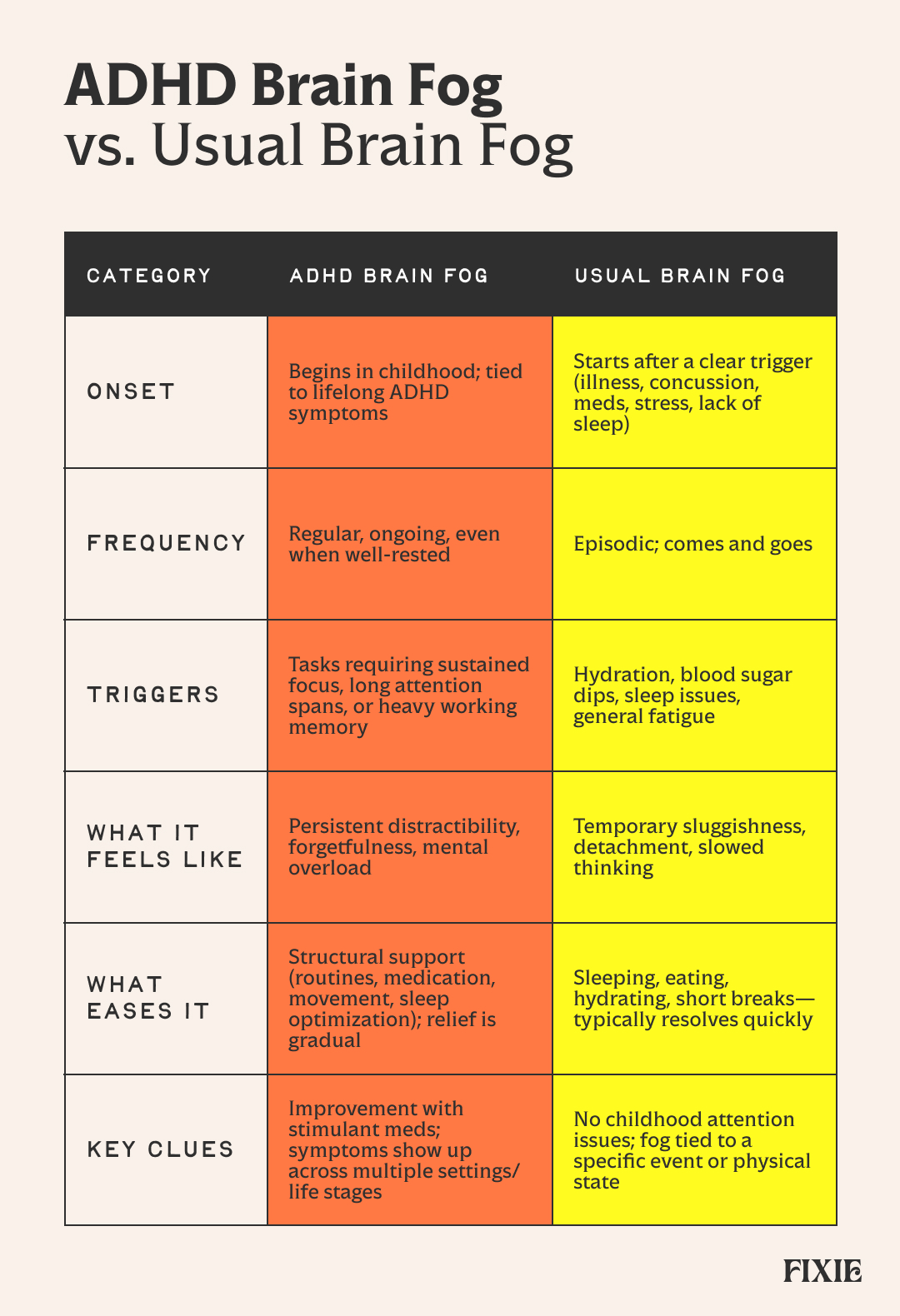
So … is this regular fog or is it linked to ADHD? Brain fog is annoying no matter where it comes from, but when your brain already feels like wet cardboard, it can be hard to tell what’s what. The key: pay attention to when the fog hits, how often it shows up, and what makes it better or worse.
When did it start?
ADHD-related fog has deep roots. “Distinguishing ADHD-related cognitive symptoms from other forms of brain fog hinges on the developmental trajectory,” says Tepper. “ADHD typically manifests before the age of twelve and persists across multiple domains of functioning throughout life.”
Classic ADHD clues include:
- Attention and executive-function issues starting in childhood (even if you weren’t diagnosed then)
- Symptoms that follow you everywhere—home, school, work
- Hyperactivity or impulsivity alongside attention struggles
- Notable improvement with stimulant meds
Brain fog from other causes tends to look different. Non-ADHD brain fog “often has a more abrupt onset, frequently linked to a specific precipitating event such as illness, injury, or medication changes,” says Tepper. Signs it’s not ADHD include, per Tepper:
- Fog showing up after a clear trigger (like COVID, a concussion, or new meds)
- Symptoms that come and go rather than stick around
- Strong ties to physical fatigue or feeling “checked out”
- No childhood history of similar mental struggles
How often does it happen?
Frequency is a big tell. ADHD fog isn’t a here-and-there thing. It “tends to happen on a regular basis, not just after a long day or a bad night of sleep,” says Dr. Kocher. Even when someone with ADHD is well-rested, the scatterbrained, distractible, forgetful feeling can persist in a way that “goes beyond normal [mental] fuzziness,” she says.
What triggers it?
ADHD-related fog tends to flare when your brain faces long stretches of focus or heavy mental lifting. “ADHD-related fog typically gets worse at times when you are required to pay close attention over long periods of time or engage in activities requiring sustained working memory,” says Hattis. Think: back-to-back meetings, detailed planning, or anything that requires your brain to hold multiple steps at once.
Usual brain fog, however, often comes down to body basics. “General brain fog typically relates more to outside factors such as hydration or blood sugar levels,” Hattis explains.
What eases it?
Everyday fog is often short-lived. Regular “brain fog is usually temporary and easily resolved,” says Quimby. A nap, a snack, or a little break often does the trick. “It typically eases once you sleep, eat, or take a break,” adds Dr. Kocher.
ADHD-related fog, though? Not so simple. It’s “often a persistent issue that stems from inherent differences within the brain,” says Quimby. Rest, hydration, and nutrient-dense foods can help, but they don’t usually produce instant or dramatic relief for ADHD brains.
So, why does this matter? Because knowing what kind of fog you’re dealing with helps you choose the right tools. Distinguishing the two is “important for determining the best way to manage the symptoms and underlying causes,” says Quimby. That may mean optimizing sleep, moving more, managing stress, building structure around your executive functions, and teaming up with pros who can help fine-tune ADHD meds or rule out issues like nutrient deficiencies or thyroid problems, he says.
Managing ADHD brain fog
When your brain feels like it’s running on 1% battery, the right habits can give you a much-needed reboot. Try these lifestyle tweaks and ADHD focus tips that actually move the needle if you have brain fog.
Start small
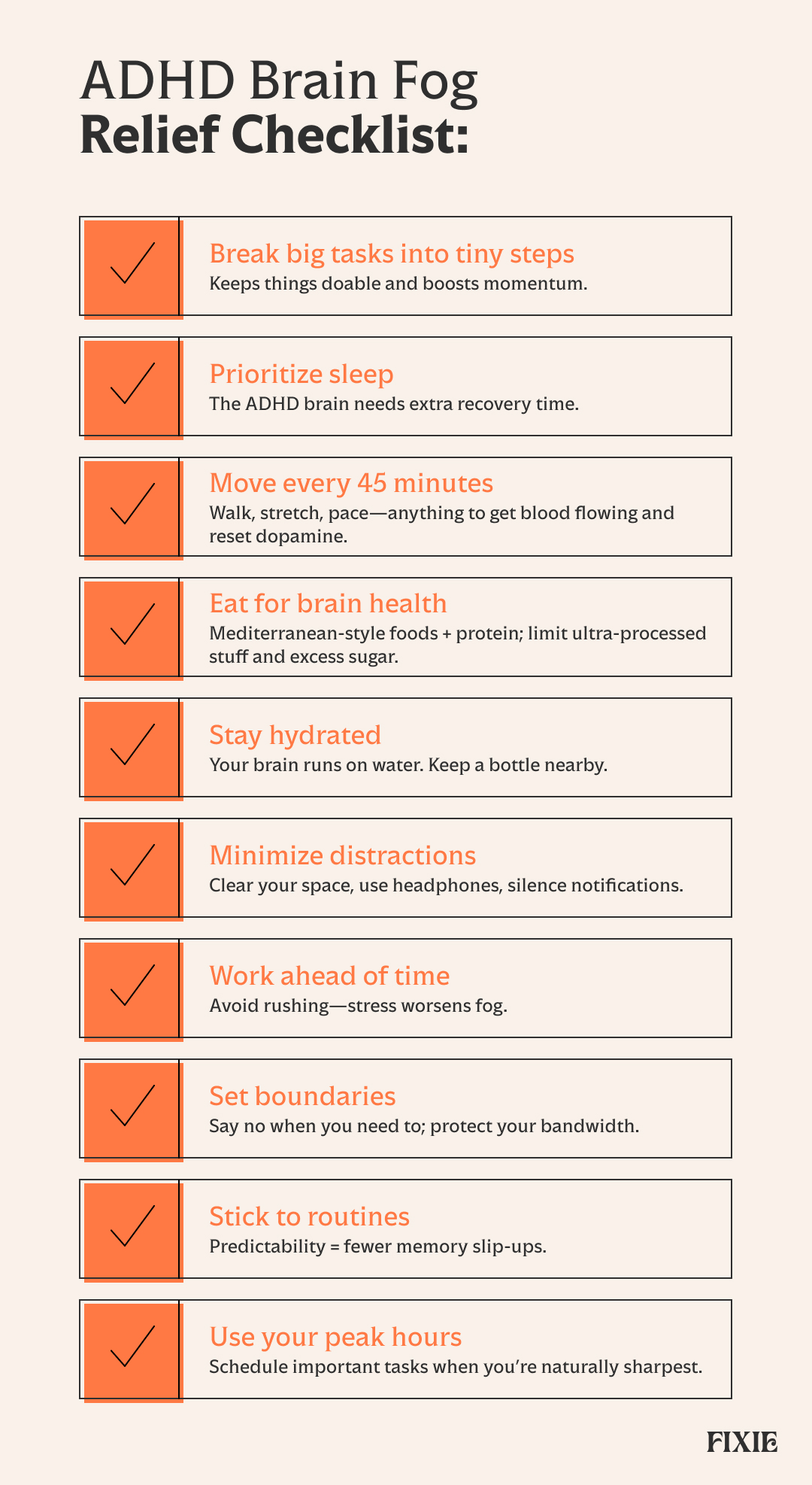
Big tasks can feel monstrous when your mind is mush. Breaking them into bite-sized steps makes them doable and way less overwhelming, says Dr. Kocher. Focusing on just one mini-task gives you a quick hit of progress—aka the little dopamine boost your ADHD brain loves.
Prioritize sleep like it’s your job
ADHD brains need more recovery time, not less, says Hattis. “To manage this type of cognitive impairment you must address the first and most important thing—your sleep architecture,” she says. Quality sleep helps clear out the brain’s waste, reduces inflammation, and resets your mental energy for the day ahead.
Move your body to wake up your brain
A quick walk, stretch, or even a few laps around your living room can snap you out of that thick, sluggish haze. “Movement increases blood flow and can shake you out of that stuck headspace,” says Dr. Kocher.
Plus, taking movement breaks every 45 minutes helps “reset your dopamine pathways… without simply relying on stimulants,” adds Hattis.
Bonus: exercise boosts brain-derived neurotrophic factor—aka “brain fertilizer”—which supports brain cell repair and connectivity. Translation: movement = ADHD clarity of mind.
Get ahead of time (literally)
Time blindness can turn brain fog into a full-on meltdown. “Getting ready earlier than expected can keep you from rushing,” which adds to the “stress of brain fog,” says Hareas. Build in buffers—future you will be grateful.
Eat like your brain matters (because it totally does)
The food on your plate affects the fog in your head. An anti-inflammatory diet (think Mediterranean style—veggies, fruit, whole grains, fish) helps your brain fire on all cylinders.
Protein is key too: “Consuming protein-rich foods helps to prevent drops in blood sugar levels that will make both ADHD and general brain fog worse,” says Hattis. Reach for fatty fish, legumes, nuts, and seeds.
On the flip side, limit ultra-processed foods and excessive sugar (they’re linked to more inflammation and worse cognitive performance).
Hydrate, hydrate, hydrate
Your brain is about 75% water, so even mild dehydration can tank your mood, memory, and attention. Keep a full water bottle nearby and sip regularly.
Learn to set boundaries (yes, really)
People with ADHD often feel they need to say yes to everything and then crash, says Hareas. “Knowing your limit on how much you can truly handle in a day is another way” to manage ADHD-related brain fog, she explains. Saying no isn’t failure—it’s self-preservation.
Create a distraction-proof zone
ADHD fog thrives in chaos. “ADHD fog gets worse when your brain keeps jumping to every sound or notification,” says Dr. Kocher. Clearing clutter, popping on headphones, or silencing alerts gives your brain fewer places to wander so you can zero in on one task at a time, she says.
Stick to a routine that supports your brain
Consistency gives your ADHD brain structure and cuts down on decision fatigue. “Routines can be a lifesaver…because when things are predictable it is a lot more difficult to forget where you put something,” says Hareas.
Play to your peak hours
Everyone has a time of day when they’re mentally sharpest. “Knowing your peak time for performance” can set you up for success, says Hareas. Schedule the brain-heavy stuff then, and save the easier tasks for the foggier zones.
Get support
Lifestyle tweaks can go a long way, but you don’t have to muscle through ADHD brain fog alone. Working with a pro can help you figure out what’s actually driving your fog and how to manage it day-to-day. And yes, meds can be part of the mix of ADHD brain fog treatment.
“Optimal management of ADHD-related brain fog typically involves integrating pharmacological treatment with behavioral and lifestyle interventions,” says Tepper. “This multifaceted approach addresses both the neurobiological and environmental contributors to cognitive difficulties.”
The bottom line
ADHD brain fog might feel like you’re wading through mental molasses, but it’s absolutely manageable. With the right mix of sleep, structure, movement, nutrition, and support (professional or otherwise), you can lift the haze and give your brain the clarity it’s been begging for. The fog may come and go, but you don’t have to stay lost in it.
Key takeaways
- ADHD and brain fog often overlap, thanks to shared issues with attention, working memory, and cognitive overload.
- Neuroinflammation, sleep disruptions, stress, and even ADHD meds can all contribute to brain fog.
- ADHD-related fog tends to be persistent and task-triggered, while everyday fog is usually more temporary and tied to things like fatigue, dehydration, or blood sugar fluctuations.
- You can ease fog by breaking tasks into tiny steps, improving sleep, moving your body, eating for brain health, creating a distraction-proof environment, and using routines.
- Managing ADHD brain fog often works best with a combo of lifestyle tweaks, behavioral strategies, and—when appropriate—ADHD medication.
Frequently Asked Questions
You can’t always instantly wipe out ADHD brain fog, but there are quick moves that can help you snap into clearer headspace according to the experts we spoke with:
- Try a movement burst first: Walk, stretch, pace, do a few squats. Getting your blood flowing resets dopamine pathways and shakes off that stuck, heavy feeling.
- Hydrate and eat something with protein: Low blood sugar or dehydration can tank focus fast, and a quick protein hit (nuts, yogurt, eggs) can stabilize things enough to think straight again.
- Fix the environment: Turn off alerts, put on headphones, clear the immediate clutter. ADHD fog gets louder when your surroundings are noisy.
- Check in on sleep. If you’re running on fumes, your brain is too. A short rest, grounding moment, or power nap can make a difference.
These tricks can give you a quick lift, but if ADHD fog is a regular thing, the real fix is consistency—sleep routines, movement breaks, structure, boundaries, and (if needed) ADHD meds and professional support.
Impulsivity and ADHD go hand-in-hand, which can lead to “I-need-to-do-this-right-now” decisions like buying something pricey or quitting a job on the spot. The 24-hour rule is a simple hack to slow that impulse down. Before making a big decision, hit pause and give yourself a full day. If the choice still feels right after 24 hours (and not just in the heat of the moment), you can move forward with a clearer head and fewer regrets.
ADHD burnout is that wiped-out, overwhelmed, zero fuel in the tank feeling that hits when managing symptoms becomes too much. It’s not a formal diagnosis, but it’s a very real experience: everyday tasks—emails, dishes, cooking—suddenly feel impossible.
Burnout happens because ADHD brains are constantly working overtime to focus, stay organized, and keep up with life’s expectations. That mental, emotional, and physical load eventually builds up until you hit a wall. And just to be clear: ADHD mental fatigue has nothing to do with laziness. It’s a sign you’ve been pushing too hard for too long and need rest, support, and better systems—not more self-blame.
Latest Posts


.jpg)