Postpartum Brain Fog: The Real Reasons Behind Baby Brain
%20(1).JPG)




.svg)
.jpg)
Whether you’re a brand-new parent or you’ve done this before, bringing home a new baby shakes up your entire world—your brain included. Shifts in focus, concentration, and overall mental clarity are common, but “common” doesn’t mean you have to struggle through it. Think you have postpartum memory loss? Read on to learn more about postpartum brain fog and what you can do to feel more like yourself again.
I’ve done the postpartum thing three times, and every single time my brain has felt a little more wobblier and a whole lot foggier. Yes, some of that is the reality of living on microwaved coffee and quick catnaps between older sibling meltdowns, but there’s also real science behind why your brain feels different after having a baby.
Raise your hand if you’ve ever felt like:
- You walked into a room and instantly forgot why you’re there.
- Your first grader’s word problem got too wordy (time to lie down).
- You’ve forgotten to take the dog out one too many (very smelly) times.
- Your partner is telling you a story about work and your brain quietly slips into another land.
If your hand shot up more than once, welcome—you’re in a big, bustling crowd of moms who totally get it. We’re diving into the science behind postpartum brain fog, why it happens, how long it sticks around, and mom-friendly ways to lift the haze and help you feel like your best self again.
What is postpartum brain fog?
Postpartum brain fog, also known as mom brain, is that foggy, scatter-brained, all-over-the-place feeling many moms notice after having a baby. Even though it’s a personal and subjective experience, feeling like a hot mess is connected to real physiological changes that happen during pregnancy and after birth.
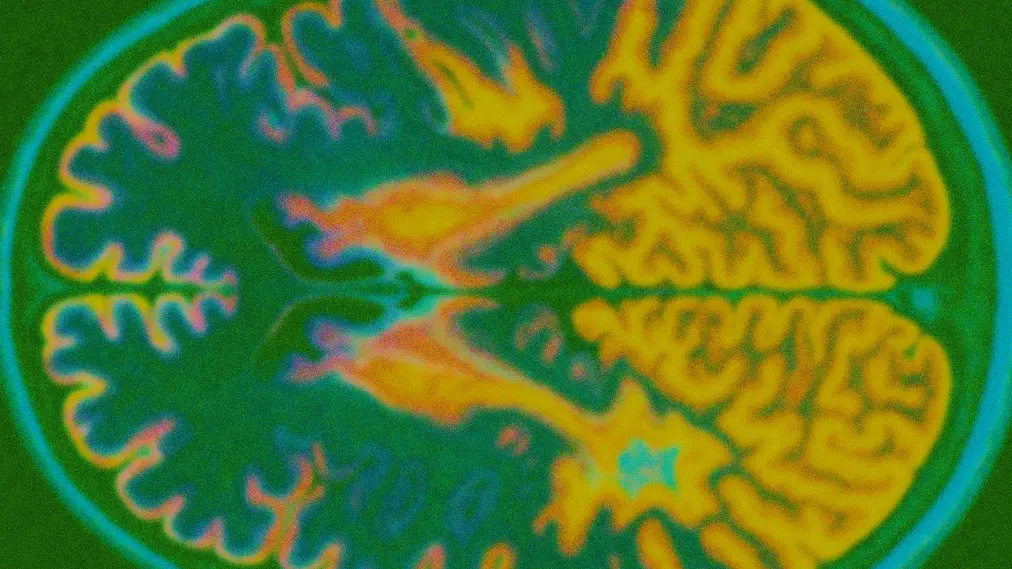
Research shows that many parts of the brain go through structural changes during the postpartum period. Changes in grey matter occur in the prefrontal cortex, parietal lobe, and midbrain during the postpartum period, and these changes affect thought processing, decision-making, and responding to the world around you. This can lead to frequent moments of forgetfulness, mental fuzziness, and slower thinking.
Brain remodeling doesn't start when the baby arrives—it begins during pregnancy. Studies show that pregnant women often experience changes in memory, cognitive functioning, and executive functioning, and these changes can start as early as the first trimester and peak in the third trimester.
What does postpartum brain feel like?
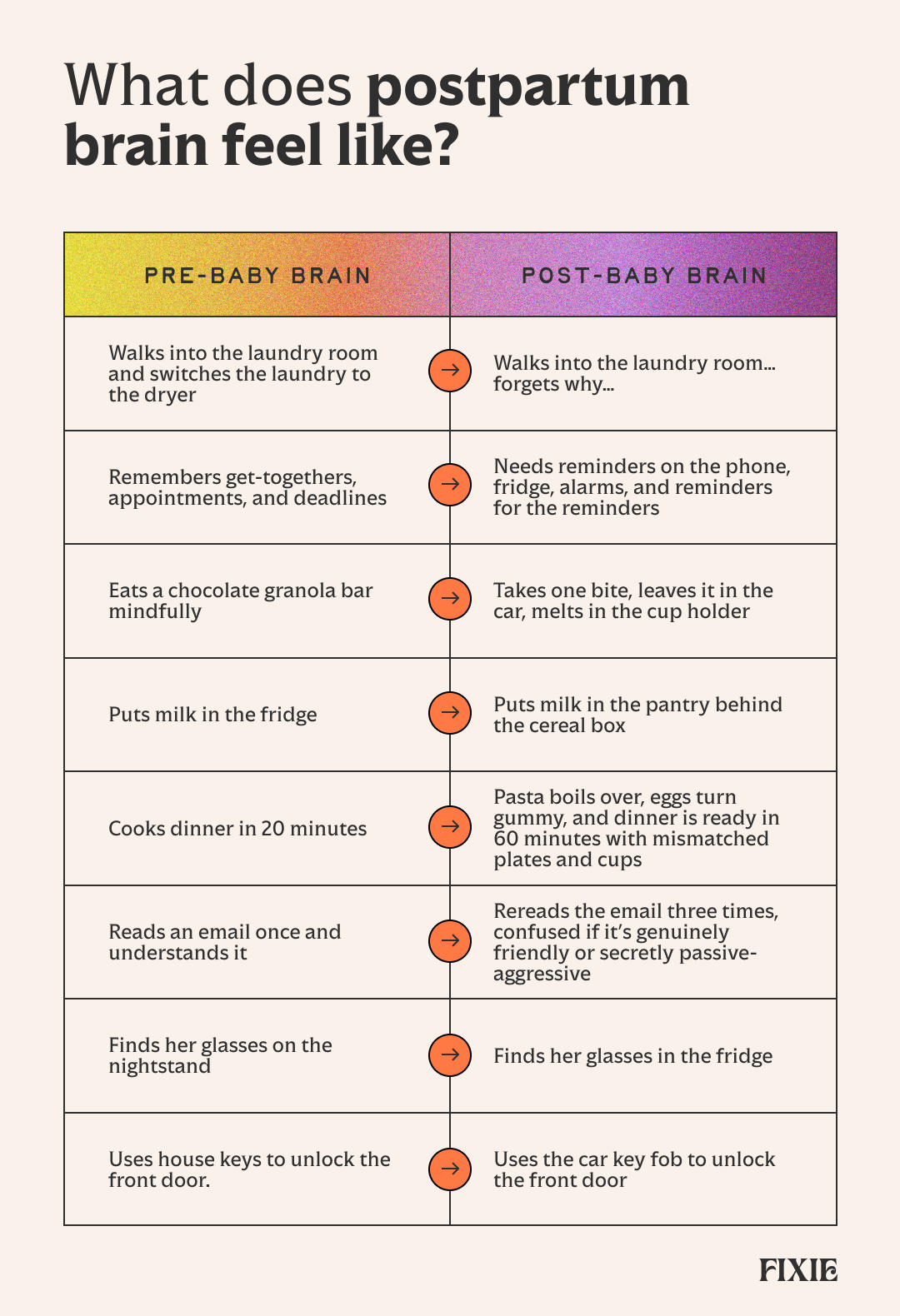
Every mom experiences new mom brain fog a little differently. Some feel more forgetful, others feel spacey, and some like their thoughts have turned into a tangled mess of brain spaghetti. To give you a clearer picture of what having a baby does to your brain, let’s compare pre-baby brain vs. post-baby brain:
| Pre-baby brain | Post-baby brain |
|---|---|
| Walks into the laundry room and switches the laundry to the dryer | Walks into the laundry room…forgets why… |
| Remembers get-togethers, appointments, and deadlines | Needs reminders on the phone, fridge, alarms, and reminders for the reminders |
| Eats a chocolate granola bar mindfully | Takes one bite, leaves it in the car, melts in the cup holder |
| Puts milk in the fridge | Puts milk in the pantry behind the cereal box |
| Cooks dinner in 20 minutes | Pasta boils over, eggs turn gummy, and dinner is ready in 60 minutes with mismatched plates and cups |
| Reads an email once and understands it | Rereads the email three times, confused if it’s genuinely friendly or secretly passive-aggressive |
| Finds her glasses on the nightstand | Finds her glasses in the fridge |
| Uses house keys to unlock the front door | Uses the car key fob to unlock the front door |
Why does postpartum brain fog happen?
Ever felt like your brain is on a random playlist shuffle after having a baby? You’re not imagining it. Postpartum brain fog is a result of real biological changes and plain parenting realities. Here are common reasons why postpartum brain fog happens:
Hormonal changes
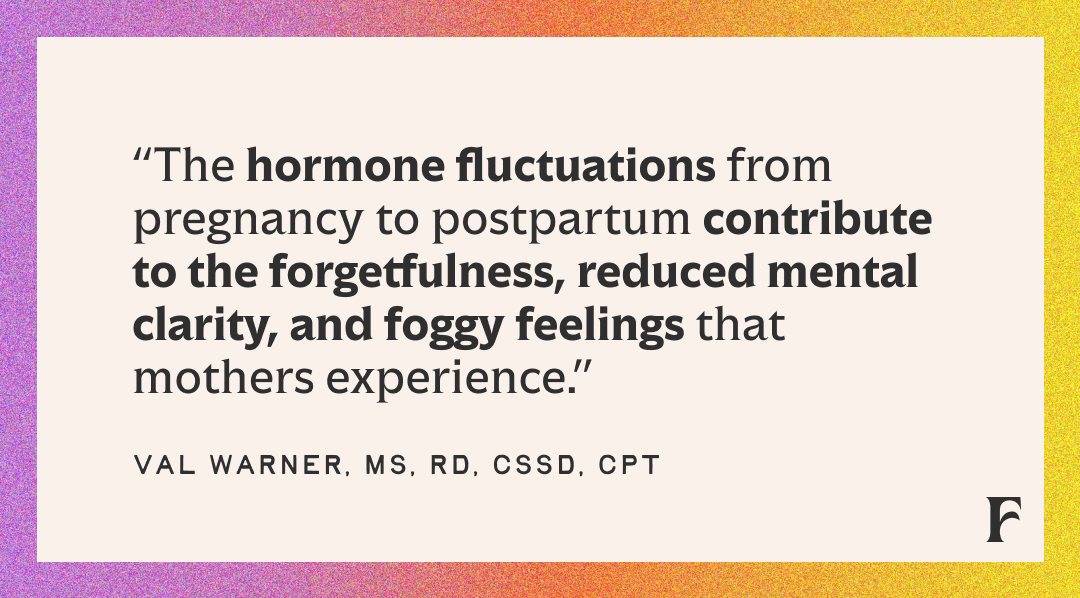
Most “baby brain” widdles down to your changing postpartum hormones. “The hormone fluctuations from pregnancy to postpartum contribute to the forgetfulness, reduced mental clarity, and foggy feelings that mothers experience,” says Val Warner, MS, RD, CSSD, CPT.
During late pregnancy, estrogen and progesterone surge to prepare your body for motherhood, and then dramatically drop after childbirth. These wild ups and downs affect neuroplasticity (your brain’s ability to adapt), may trigger neuroinflammation (brain inflammation), and can mess with mood and focus, leaving you feeling moody and spacey.
Most people don’t realize the impact of estrogen on the brain—it plays a critical role in brain health. Estrogen promotes DNA repair, regulates blood flow to the brain, influences plasticity, promotes cell growth and repair, regulates mood, and is neuroprotective against cognitive decline. There’s another period in a woman’s life when a drop in estrogen leads to brain fog: perimenopause.
Pure, unrelenting exhaustion
Becoming a parent basically means your sleep life ceases to exist as you knew it. Between waking up with a crying newborn and older kids needing just one more sip of water, your nights are short, interrupted, and full of low-quality Zs. Sleep deprivation directly affects your memory, focus, decision-making, and even your ability to string together a coherent thought.
Perinatal mood changes
Perinatal mood disorders are incredibly common post birth, with one in five pregnant or postpartum women experiencing a mental health condition. Interestingly, brain changes during this period may make you more susceptible to symptoms of perinatal mood disorders, which can feed into brain fog and create a cycle of forgetfulness, brain overwhelm, and mental fuzziness.
“Postpartum mood disorders don’t just affect how you feel—they can quietly cloud your thinking too,” says Jessica Brantley-Lopez MBA RDN. “Many new moms tell me they suddenly can’t focus, make simple decisions, or string thoughts together without effort, and that heavy cognitive fog often piles frustration and ‘I’m failing’ feelings on top of everything else.”
Warner adds that when a mother struggles with mood regulation, brain fog can shift from forgetfulness to difficulty managing emotions or staying present with her baby. “This can interfere with bonding, make daily tasks feel overwhelming, and add stress to an already demanding adjustment period,” Warner explains.
Mommy things
Your brain has a new full-time job: keeping a tiny human alive, happy, and fed. Priorities shift, mental bandwidth is maxed out, and remembering things like paying bills or where you put your keys falls somewhere near the bottom of the to-do list. Your mental energy is reserved for the big stuff, like feeding and diaper explosions, so brain fog can be seen as a natural side effect of being a mom-multitasker.
The silver lining of these structural brain changes is that it helps your brain focus its resources on the responsibilities and mental demands of motherhood. “A mother's brain doesn't just "adjust" after giving birth, it actually goes through dynamic rewiring that literally reshapes a mother's brain to promote positive mother-infant bonding and acclimates us to our new role of motherhood,” says Lopez. In other words, your brain is rewiring itself to help you respond better to your baby’s needs, even if it means forgetting where you parked the stroller.
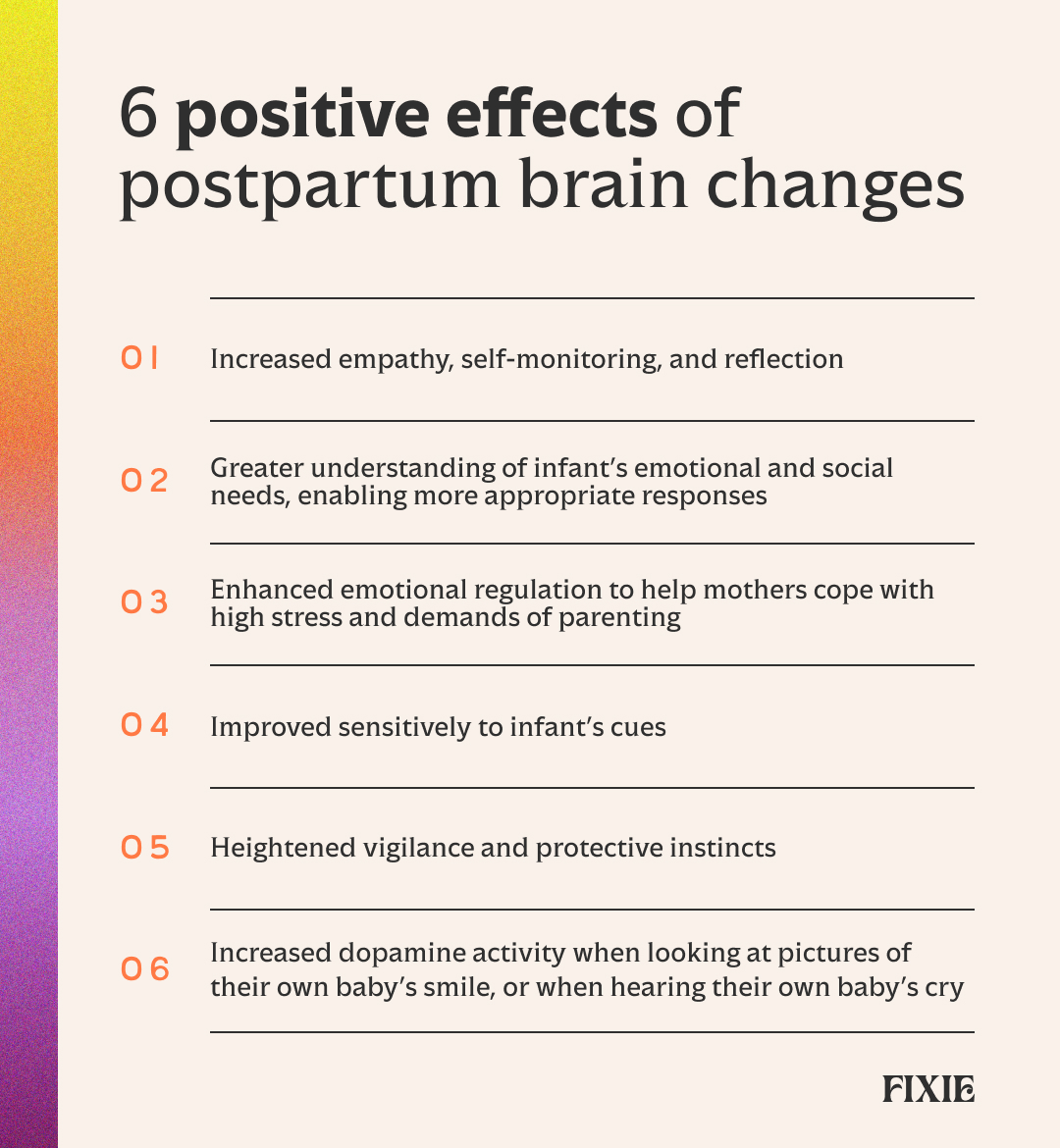
Other positive effects of these brain changes may include:
- Increased empathy, self-monitoring, and reflection
- Greater understanding of infant’s emotional and social needs, enabling more appropriate responses
- Enhanced emotional regulation to help mothers cope with high stress and demands of parenting
- Improved sensitively to infant’s cues
- Heightened vigilance and protective instincts
- Increased dopamine activity when looking at pictures of their own baby’s smile, or when hearing their own baby’s cry
How long does postpartum brain fog last?
It varies from mom to mom and can linger well beyond the initial postpartum period. One study found that total gray matter volume and cortical thickness decreased as pregnancy progressed, and only partially bounced back after birth. Some research suggests these changes can last up to six years after childbirth (and if you’re like our editor Saralyn and have your last kid at 38, 6 years is just long enough for perimenopause brain fog to kick in! Double whammy!).
In everyday terms, that foggy, forgetful feeling can stick around for anywhere from two to six years after giving birth. So if you find yourself walking into a room and completely blanking, or wondering where you left your coffee (again), it’s just your noggin rewiring itself for the long haul of motherhood.
What actually helps postpartum brain fog?
While postpartum cognitive changes are normal, it doesn't mean you need to sit around and suffer through it. Here are simple, realistic ways to think clearer and feel more like yourself again, even in the chaos of new motherhood.
Creative ways to get more rest
“Just sleep more” isn’t helpful advice—especially when you’re up feeding, pumping, and soothing a tiny human around the clock. Here are small, doable ways to sneak in the rest your brain so desperately needs.
- Try micro-naps: Research shows that a 30-minute nap can restore clarity and your energy levels, which can give your mind a much-needed reset and improve clarity.
- Aim for 7 to 9 hours of sleep (however you can piece it together!): This might mean going to bed earlier, swapping morning duties with a partner, or inching your bedtime earlier by 10 to 15 minutes each night. The goal is getting enough rest to function.
- A sound machine: For you, for the baby, for everyone. White noise may help block out random sounds (like the dog, the doorbell, or your baby grunting in their sleep) so you can fall asleep faster and stay asleep longer.
- Gentle yoga or stretching: When your body feels stiff from feeding, rocking, and holding a baby 24/7, a few minutes of stretching can help release tension and help de-stress your mind.
Add nutrient-dense foods to your diet
What you eat affects everything—your energy, mood, hormones, and especially your brain health. But if you’re a postpartum mom, you’re probably eating in 2-minute windows, often with one hand, and sometimes the scraps off your toddler’s plate. So instead of aiming for a “perfect” diet, focus on nutrient-dense add-ins that support your brain and help steady your blood sugar. Examples include:
- Healthy fats: Avocado, nuts, seeds, and olive oil support brain health and keep you fuller for longer.
- Protein: Stabilizes blood sugar levels and helps you avoid that mid-afternoon crash. Consider hard-boiled eggs, Greek yogurt, turkey roll up, string cheese, or adding protein powder to smoothies.
- Omega-3s: Supports brain health and prevents inflammation. Try a quick salmon stir-fry, add chia seeds to oatmeal, or flax seeds blended into a smoothie.
Include Fixie Dust into your routine
Launching soon, Fixie Dust is a sweet-sour blend of brain-loving, science-backed nootropics that brings your brain a gentle lift of focus and energy. With science-backed ingredients that help support calm, focus, and mental stamina, it easily fits into the wildest postpartum schedule. No brewing, no blending, no complicated routine—just a quick pour under your tongue and *poof.* A little sparkly dust to help you feel more like you again.
Here’s what’s inside:
- L-theanine (vegan), 200 mg: Helps reduce stress and promotes calm. Perfect for those moments when your mind feels overstimulated or stretched thin.
- Citicoline (CDP-choline), 250 mg: Supports the production of acetylcholine, a neurotransmitter critical for energy, attention, and memory.
- L-tyrosine (vegan), 500 mg: Helps support cognitive flexibility and focus during stress by serving as a building block for the neurotransmitters dopamine and norepinephrine.
- Acetyl l-carnitine, 500 mg: Involved in brain cell energy production and offers neuroprotection by reducing oxidative stress.
- Extenergy® sustained-release Caffeine (from green coffee bean), 50 mg: A steady stream of caffeine to help you feel more awake and focused.
Don’t miss out—sign up for Fixie Dust emails to be the first to know when it drops!
When to be concerned about postpartum brain fog
It can be confusing to know whether what you’re experiencing is typical postpartum brain fog or something that needs extra attention. Feeling forgetful, foggy, or “off” can also be symptoms of other health conditions, so don’t chalk everything up to mom brain. “Other signs and symptoms may include having low interest in doing anything or thoughts of hurting yourself and/or your baby,” says Warner. These can be warning signs of postpartum depression (PPD) or another perinatal mood disorder and require immediate support.
As a general rule, if your symptoms persist, worsen, or start interfering with your daily life, it’s a good idea to check in with your healthcare provider. They can run tests, review your overall health, and help determine if something else might be contributing to your foggy feelings.
Support from registered dietitians can also be valuable, and they can help postpartum women tweak their dietary habits to improve symptoms. “As a dietitian I encourage my clients to focus on getting adequate hydration, eating nutrient-dense meals and snacks, and resting when possible,” says Lopez. All clinicians should emphasize simple, achievable recommendations rather than overwhelming a new mom with a drastic, full-blown lifestyle overhaul. This might include accepting help from others with cooking, cleaning, or meal prep, and learning to let go of small messes (I’m truly speaking to my soul here!), which may free up time for rest.
The bottom line
Postpartum brain fog is totally normal, and it hits most of us moms in one form or another. But you don’t have to just sit around and wait it out. Being proactive and making small lifestyle tweaks can make a significant difference in how you feel and how present you can be with your baby. Give yourself the gift of Fixie Dust (push present?!) for sharper focus and a gentle boost in mental clarity. You’ll thank yourself later (because, yes, you will remember!).
Key takeaways
- Brain fog after giving birth is normal, and many new moms experience forgetfulness, mental fuzziness, and slower thinking in the years after childbirth.
- Structural brain changes, hormones, and exhaustion all play a role in why your brain feels “off.”
- Small lifestyle tweaks, like prioritizing rest, a healthy diet, and accepting support from others, can improve symptoms.
- Watch for warning signs and seek help immediately if your brain fog starts to significantly affect your daily life or your symptoms worsen.
Frequently Asked Questions
It’s completely normal to feel forgetful, foggy, or just “off” six months after having a baby. There’s a lot happening, from exhaustion and physical body changes to the mental load of new responsibilities. Your brain itself also goes through changes, which can make remembering things feel extra tricky.
Your brain undergoes structural changes after you have a baby. Parts of the brain like the prefrontal cortex, parietal lobe, and midbrain shift during the postpartum period, which affects clear thinking, decision-making, and how you react to your environment.
It varies, but these changes can last surprisingly long—sometimes for up to six years after childbirth. That’s why it’s important to be proactive and support your brain and body with simple lifestyle and dietary changes.
Latest Posts