Is Brain Fog Dangerous? What’s Normal, What’s Not, and When to Pay Attention





.svg)

It’s annoying to lose your keys (again) and embarrassing to blank on your colleague’s name (also again), but is brain fog actually something to worry about? Most of the time, no. Here’s how to know when your brain fog could be cause for concern.
This week, I forgot where I parked my car— two different times, in two different parking lots. As I scoured the rows, my partner looked at me like I was a little nuts. “Really?” he asked. “It’s over there.” I laughed it off and assured him that brain fog comes with the territory of being a busy working mom who’s now also a member of The Perimenopause Club.
But whenever these memory blips happen, a little part of me wonders: Is it actually normal? Should I be worried? Is brain fog dangerous? How do I know if something more serious is at the root of my fog and forgetfulness?
Rest assured: brain fog is normal, common, and can happen to anyone, though supercharged times of stress, a few nights of tossing and turning, and shifting hormones can make your brain feel extra hazy. While frustrating and unsettling at times, brain fog usually doesn’t warrant alarm by itself.
“Brain fog is seen as normal and expected when you're overwhelmed or doing more than you physically should,” says Emilé Radyté, Ph.D., a neuroscientist who focuses on women’s mental health and the CEO of Samphire Neuroscience. “Usually it shows that the brain has fewer resources to operate than normal. So it means your capacity has decreased. Brain fog is one of the brain's ways of communicating that it's tired.”
That feeling of being overloaded, overstressed, underslept, or hormonally haywire is all too familiar for many people of all ages (sigh) It’s not shocking that our brains might feel like they need to set their out-of-office message now and then. It’s usually temporary and nothing to freak out about. Still, there are moments when brain fog deserves closer attention. Here’s how to know when you should worry about brain fog.
Is brain fog dangerous?
The short answer: no. Typically, brain fog is not dangerous. (Phew!) If there’s anything worrisome, it’s not the brain fog itself. It’s what could be causing the brain fog.
Most of the time, brain fog is completely normal, fleeting, and manageable. Common causes of brain fog in women are usually tied to stress and lack of sleep. Hormonal shifts during the menstrual cycle, pregnancy, postpartum, and the menopause transition can cloud the brain, too.
“Brain fog by itself is usually not dangerous,” says Sanam Hafeez, Ph.D., a licensed psychologist in New York and founder of Comprehend the Mind. “It often happens because of stress, lack of sleep, or a busy lifestyle. Most of the time, it goes away once rest, healthy food, and breaks are added to your routine.”
But, brain fog may be more serious when it’s related to an uncontrolled or undiagnosed mental health condition (like depression or anxiety), when it seems to worsen, or when it doesn’t show any signs of going away.
Another cause for concern? When it shows up with other physical symptoms in tow, like if you suddenly get an unexplained headache or feel dizzy. “When you see brain fog clustering with other symptoms, it’s a good indicator that it’s more concerning,” Radyté says.
Hafeez adds: “If brain fog is sudden, severe, or keeps getting worse, it can be a sign of a medical problem. Conditions like infections, [chronic] hormone issues, or vitamin deficiencies may need attention. If it doesn’t improve or it affects daily life, it’s a good idea to see a doctor.”
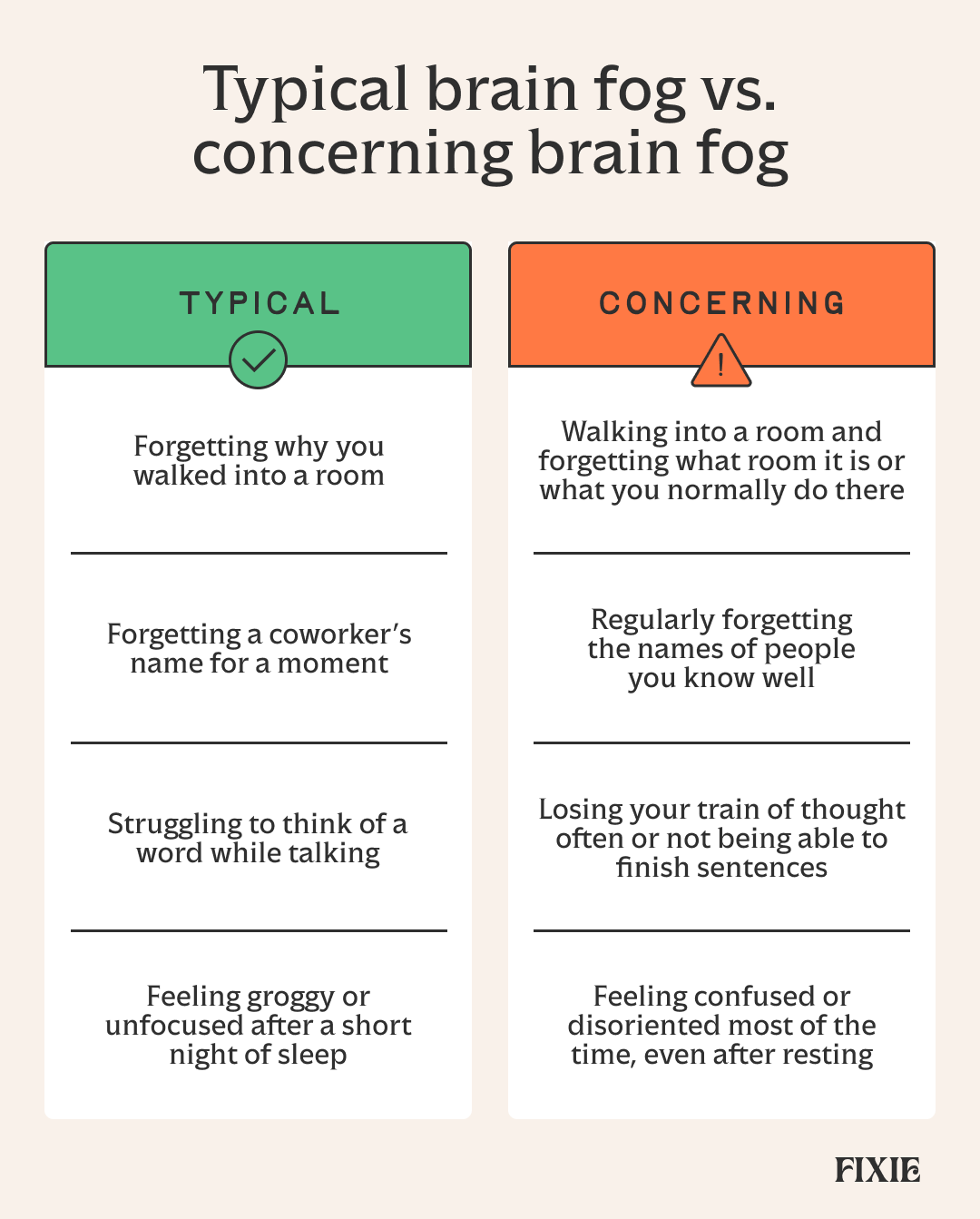
Typical: Forgetting why you walked into a room
Concerning: Walking into a room and forgetting what room it is or what you normally do there
Typical: Forgetting a coworker’s name for a moment
Concerning: Regularly forgetting the names of people you know well
Typical: Struggling to think of a word while talking
Concerning: Losing your train of thought often or not being able to finish sentences
Typical: Feeling groggy or unfocused after a short night of sleep
Concerning: Feeling confused or disoriented most of the time, even after resting
What causes brain fog?
There are lots of potential causes of brain fog. Most of them aren’t dangerous and are manageable through lifestyle changes or medical treatment. Here are some of them:
- Lack of sleep
- Stress (especially chronic stress) and burnout
- Changes in hormones
- Mental health conditions, such as depression or anxiety
- Nutritional deficiencies
- Autoimmune disorders, like multiple sclerosis (MS) or celiac disease
- Infection or illness, such as Lyme disease or long COVID
- Medications (such as sleep aids, antidepressants, and antihistamines)
Let’s break this list down further, exploring which root causes deserve medical attention, and which are simply a factor of hectic day-to-day life.
Everyday causes of brain fog
Brain overload
My day is peppered with what feels like thousands of decisions: what to wear to work, what to cook for dinner, what birthday gift to buy my kid’s friend, which deadline to handle right now. Sound familiar to you, too? Add in some information overload from your latest doomscroll sesh, jam-packed schedules, and loads of commitments—all of which vie for attention and tax the brain—and brain fog is a likely result.
“It would be absolutely normal at the end of day to feel a little bit foggy or distracted, or not as together as you otherwise would be, because your brain has been strained throughout the day,” Radyté says.
Lack of sleep
No surprise here: bad sleep can make our body and mind feel sluggish, especially if it’s ongoing. In a cruel twist, I sometimes struggle with sleep because my brain thinks bedtime is the perfect opportunity to start thinking all the thoughts. The result? A thick fog come morning.
“If you haven't had sufficient sleep for an extended period of time and you’ve accumulated a lot of sleep debt, you're likely to feel more brain fog just because your body hasn't recovered every night and is therefore running on fumes,” Radyté says.
Lingering causes of brain fog
Hormonal changes
Estrogen, progesterone, and testosterone are three hormones that play a big part in brain function. When hormone levels fluctuate during various times in a woman’s life, brain fog is often a resulting symptom.
While hormonal changes aren’t typically dangerous, that sort of brain fog may be harder to control because hormones can spike up and dip down so often. In perimenopause and the menopause transition, you might need hormonal or other treatment before symptoms let up.
Chronic stress
The stress hormone cortisol can also contribute to a sense of fogginess. Cortisol tends to stay elevated when we’re stressed, which can negatively affect memory and focus and disrupt sleep… keeping the cycle of brain fog churning.
That’s because much of what causes brain fog is intertwined. It’s not unusual for women to be dealing with stress, plus hormonal changes from our periods or perimenopause, plus not-great sleep, all at the same time. Radyté refers to this as the “double whammy” of brain fog for women. “But,” she adds, “if you can control one [root cause of brain fog] or another, it would probably make the symptoms much better.”
Nutritional deficiencies
It’s true: when my diet is dialed in, I feel better. Certain vitamin and mineral deficiencies are linked to brain fog. The biggies are vitamin B12, iron, magnesium, and zinc. Making a change to your diet or supplementing can help, but only a blood test can formally diagnose a nutritional deficiency.
More serious causes of brain fog
First, let’s temper the word “serious”—it does not automatically mean your brain fog is life-threatening or irreversible. But it does mean the haze is indicative of a condition that requires treatment of some kind—not just to alleviate the brain fog but also to manage the root condition overall.
Autoimmune disorders
There are more than 80 known autoimmune disorders. Each one is different, but generally, they involve higher levels of inflammation, which some research has linked to brain fog. Examples include celiac disease, multiple sclerosis (MS), and fibromyalgia.
Mental health conditions
Depression and anxiety can contribute to fatigue and fogginess. This may be caused by dysfunctional neurotransmitter activity or by overtaxing the brain—particularly the amygdala. Stress and sleep problems often accompany these conditions, which can make symptoms worse (including brain fog).
What is debilitating brain fog?
Debilitating brain fog doesn’t mean something terrible is happening or that your mind is going to permanently feel muddy. But it does mean your system is overwhelmed enough that normal functioning is compromised.
Normal brain fog may feel like occasionally and briefly forgetting a word or a name, not being able to locate your wallet right away when you’re leaving the house, or having trouble concentrating on something you’re reading.
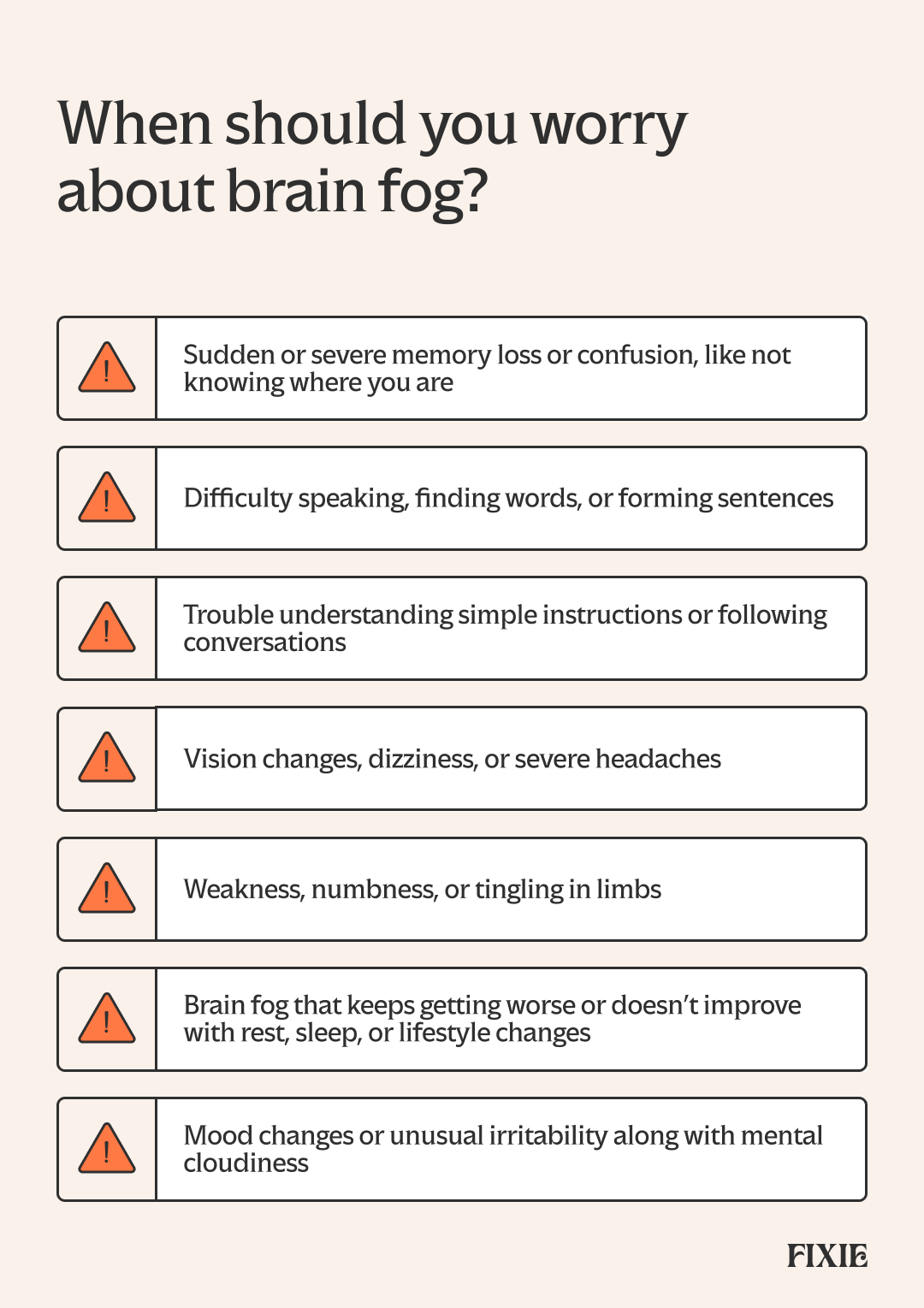
On the other hand, debilitating brain fog actively interferes with your life and persists for a longer period of time. It can be caused by numerous conditions and situations like:
- pregnancy and postpartum hormonal changes combined with inadequate sleep
- severe sleep deprivation from insomnia or other sleep disorders
- workplace burnout
- chronic or long-haul illness, like long COVID
- chemotherapy treatment
“Usually, brain fog wouldn't be a single concerning symptom in and of itself, but if it doesn't resolve, then that's a concern,” Radyté says. “If it's severely impacting your day-to-day functioning and memory, then that's worth investigating further.”
Persistent, debilitating brain fog is different for everyone, but some describe it as:
- Feeling mentally checked-out or hazy for hours or days
- Having a hard time performing regular tasks or following conversations or directions
- Feeling confused or foggy after even short bouts of activity
- Being unable to stay on task without any distractions or making frequent mistakes
- Feeling fatigued much of the time
- Struggling to read, write, or process information
If brain fog begins to limit your basic functioning, work performance, relationships, or safety, it’s worth scheduling an appointment with your physician to try to determine the cause and formulate a treatment plan.
When should you worry about brain fog?
I know firsthand: it's frustrating when your brain short-circuits. It's embarrassing when you're trying to recall a name or conversation, or trailing off mid-sentence because the thought evaporated. While it’s not usually something to be too concerned about, there are some occasions when it's worrisome.
The key factors to consider are 1) whether the brain fog is accompanied by other symptoms, and 2) if it seems to appear out of the blue. If either of those ring true, you should schedule a medical evaluation. Also, brain fog that consistently interferes with your work and home life should be evaluated—especially if it poses a danger while you’re driving or in the type of work you do.
Here’s an example from Radyté: If you typically feel foggy and get migraines right before you get your period, that can probably be chalked up to your hormones. But if headaches and fogginess suddenly appear at a random time in your cycle, if they stick around for longer than normal, or if they don’t seem to be tied to another cause, it’s probably worth having a conversation with your doctor.
Another indicator you may want to contact a physician? “If brain fog doesn't go away with rest and a change of circumstances, like if you go on holiday,” she says. “Normal types of brain fog should be alleviated by [rest and] the changing environment, because your brain should be able to recuperate.”
Red flag symptoms to get checked right away
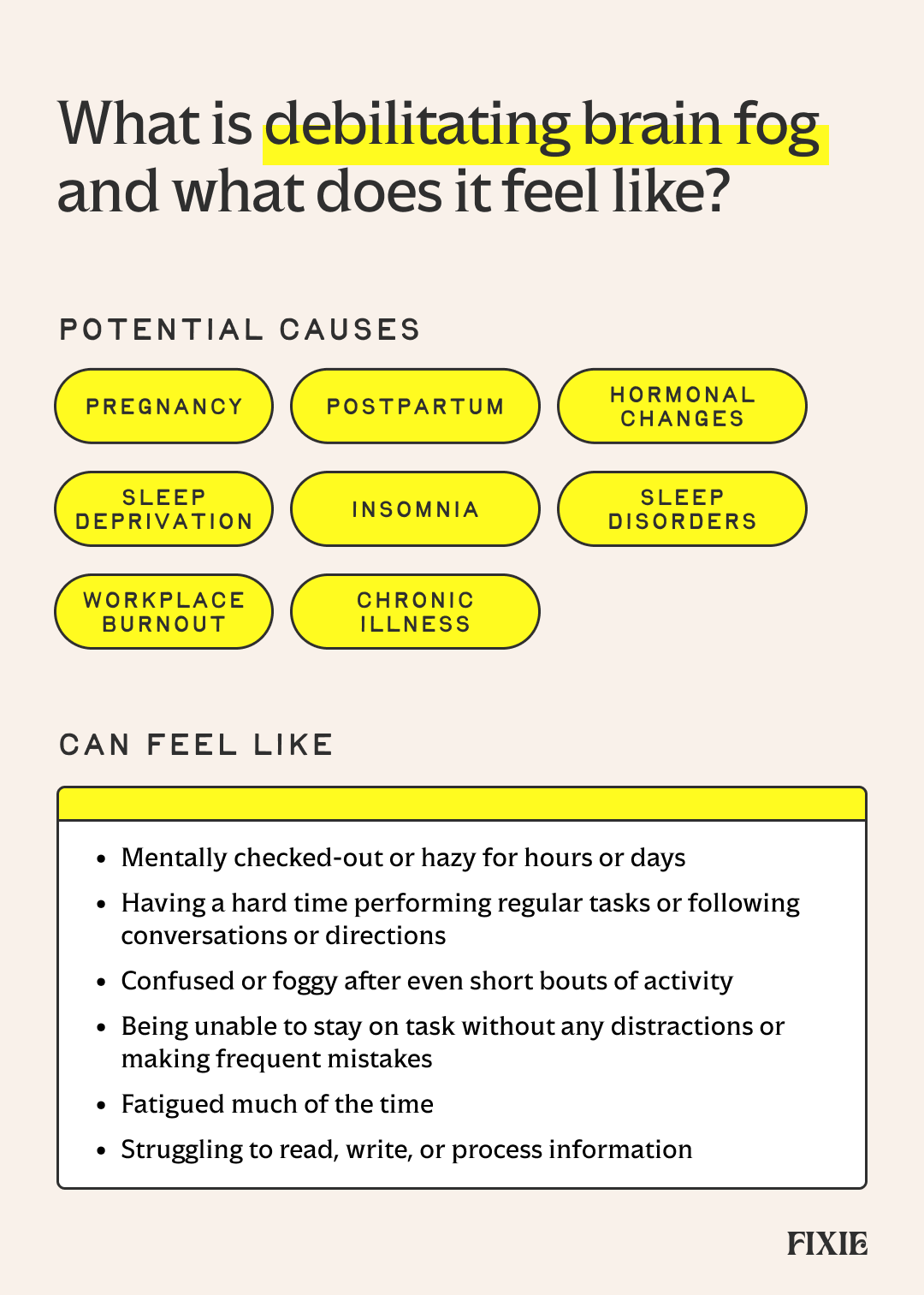
If you experience any of these symptoms, Hafeez says you should schedule an appointment with your doctor as soon as possible. And, if you or your loved ones don’t think it can wait for a regular appointment, visit your local emergency department for an evaluation:
- Sudden or severe memory loss or confusion, like not knowing where you are
- Difficulty speaking, finding words, or forming sentences
- Trouble understanding simple instructions or following conversations
- Vision changes, dizziness, or severe headaches
- Weakness, numbness, or tingling in limbs
- Brain fog that keeps getting worse or doesn’t improve with rest, sleep, or lifestyle changes
- Mood changes or unusual irritability along with mental cloudiness
How to manage brain fog
In many cases, you can help the fog clear with some simple lifestyle tweaks. Give these a try:
Immediate or same-day steps
When you need in-the-moment relief so you can concentrate and get stuff done, these quick practices might help.
- Try relaxation techniques: Often easier said than done, getting a grip on your stress can also help clear your mind. Hafeez suggests breathing exercises, meditation, stretching, or light exercise to help decompress. Even a few minutes listening to a guided meditation on an app can help clear out the brain clutter.
- Go outside: Take regular breaks during work or study to prevent mental overload. If you can, get outside, even for a few minutes. “Try to do a walk during the day,” Radyté says. “Anything that disrupts the pattern is actually very good for the brain because it's a way of recovering.” Here’s another benefit to spending more time outdoors: Light exposure has real perks for brain health. Bright light can improve cognitive performance, reaction time, and memory.
- Sprinkle in some Fixie Dust: Fixie Dust has a proprietary blend of ingredients that are proven to help you focus—fast. Pour it under your tongue and feel the fog lift within a few minutes.
Short-term steps
You can implement these steps anytime, but they’ll work better the more they can become part of your regular routine.
- Eat and drink well: Nutrient-dense foods and plenty of H20 can go a long way toward getting your brain in gear. “Eating balanced meals and staying hydrated supports brain function,” Hafeez says. “Limit alcohol, caffeine, and highly processed foods, which can worsen mental cloudiness.”
- Don’t skimp on sleep: It’s tricky for any part of us to function at its peak if we’re totally zonked. “If brain fog is starting to feel overwhelming, the first step is to improve sleep,” Hafeez says. “Go to bed and wake up at the same time every day, and make your bedroom dark and quiet.”
- Level up your workout routine: Research shows that exercise is crucial for the health of our brain (and the rest of the body). Cardio can keep the brain’s internal circuitry intact by improving brain plasticity and strengthening brain connections related to thinking, movement, and memory. Plus, exercise is a great way to burn off stress, improve depression and anxiety symptoms, and help you get more zzz’s at night.
- Build in screen-free time: Our brains get bombarded with tons of information all day long, largely from our screens. It’s tough, but work in periods of time in the evenings or on weekends to close your laptop and put your phone away for a while. “It’s helpful because it avoids overstimulating the brain and overtiring it and therefore making it more vulnerable,” Radyté says.
Long-term steps
We love a quick fix, but if brain fog seems to be sticking around, these steps might be a better bet.
- Track symptoms: Keeping track of when your brain fog seems to emerge can help you recognize patterns over time—and that info could help you nip brain fog in the bud before it even starts. “You need to know what's normal for you and what isn't so that you can flag any changes,” Radyté says. Make a note of when brain fog appears and what seems to trigger it. A journal like this will also be helpful should you decide to see a doctor about how you’re feeling (and using a journal will keep you from forgetting your symptoms because: brain fog).
- Get your blood checked: There’s no single blood test that will tell you, “Yep, you’ve got brain fog. Here’s exactly why.” But if your brain fog isn’t going away, bloodwork can provide important clues as to what might be behind the hazy head, including nutritional deficiencies, hormonal imbalances, thyroid or autoimmune disorders, or other underlying health issues. Talk to your doctor to see which tests might make sense for you.
- See a physician: If these steps don’t help, if the fog keeps getting worse, or if other unusual symptoms start to pop up alongside the fog, it’s important to see a doctor to check for underlying health issues.
Supplements that work for brain fog
Prioritizing healthy choices is key, but you can also get some extra support from science-backed supplements that can help get rid of those foggy feelings.
Citicoline: The nootropic “smart drug” is a naturally occurring compound that’s good for brain health and has been found to improve memory, focus, and mental energy. Research has indicated that the citicoline brand Cognizin was more effective than a placebo at improving attention and memory.
Caffeine: You know it, you love it. The old fave is actually a brain-revving nootropic, not just a beverage. It can help us feel more alert and laser-focused.
L-theanine: The calming effects of this amino acid can help us chill waaaay out. When paired with caffeine, it keeps the alertness but ditches the jitters.
L-tyrosine: Another amino acid, this one gets converted into neurotransmitters dopamine and norepinephrine, which are important for memory, mood, and in-the-moment brainpower when we’re stressed out.
Acetyl-L-carnitine: ALCAR for short, this amino acid is tied to mood, mental sharpness, and energy production.
Vitamin B12: B12 is an essential vitamin we get from food or supplements that’s important for energy, brain function, mood, and lots more.
Fixie Dust: Don’t forget this one, of course! It’s been formulated with the nootropics you need to feel calm and clear-headed, no matter what your day has in store: L-theanine, ALCAR, citicoline, L-tyrosine, and juuuuuust enough caffeine to give you the zip minus the crash.
The bottom line
Most of the time, brain fog isn’t dangerous. Getting to the bottom of your brain fog (and figuring out how to manage it) requires figuring out the root cause first. Normal brain fog comes and goes, often depending on stress levels and sleep quality. Persistent brain fog lingers, perhaps due to a nutritional deficiency or hormonal imbalance.
On the other hand, brain fog that is cause for concern comes on suddenly and without an apparent reason. It may be marked by more serious memory problems or confusion and accompanied by other physical symptoms. If you experience any of these “red flag” symptoms, be sure to seek medical care.
Otherwise, remember: brain fog is not usually an emergency. While it’s sometimes easier said than done, clearing the mental haze is often completely doable with a few intentional changes. Brain fog is rarely dangerous… even if you have to take a few laps around the parking lot to find your car.
Key takeaways
- Brain fog isn’t usually dangerous in and of itself, and it’s not usually a sign of a serious underlying condition.
- Brain fog is often tied to stress, hormones, and sleep, but can stem from a number of things. Addressing the root cause should help clear the haze.
- Lifestyle changes can often improve brain fog, depending on the root cause.
- Sudden, severe, or worsening symptoms require medical attention.
Frequently Asked Questions
Occasional brain fog (feeling mentally tired, having trouble concentrating, experiencing minor forgetfulness) typically doesn’t require medical treatment. But if you or a loved one suddenly feels very confused or disoriented and also has a headache, dizziness, weakness, numbness, or other unexplained symptoms, it’s probably a good idea to get checked in the ER.
Brain fog is different for everyone. Severe brain fog may leave someone unable to perform their usual daily work, home, and social activities easily. It may last a long time, despite modifications to sleep, diet, exercise, and other lifestyle habits.
Brain fog is a symptom of many illnesses. Some include long COVID, fibromyalgia, celiac disease, multiple sclerosis (MS), Lyme disease, and chronic fatigue syndrome.
Memory loss and confusion are early signs of Alzheimer’s and dementia. But just because you experience these doesn’t mean you’re developing these diseases.
Latest Posts


.jpg)